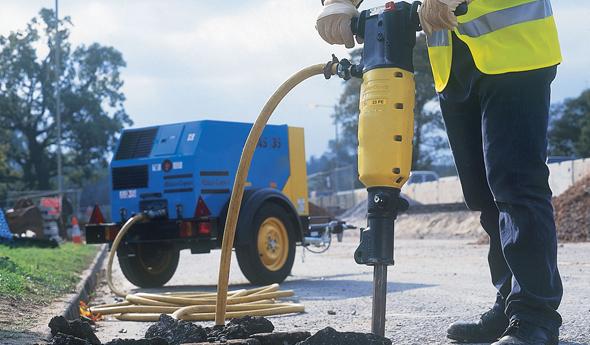
A Closer Look at Vibration Hazards in the Workplace
Vibration exposure is a common by product of operating power tools and heavy equipment across a wide range of industries. While these tools contribute to efficiency and productivity, the vibrations they generate can gradually impact worker health—particularly in the hands and arms. That buzzing or tingling sensation after a long shift isn’t always just fatigue; in some cases, it may be an early sign of overexposure.
In this article, we’ll discuss how vibration hazards typically present on job sites and how preventive measures—including wearing the right hand protection—can support efforts to reduce the risks associated with prolonged exposure.
What Are Vibration Hazards?
Vibration hazards refer to the physical stress workers may experience when using tools or equipment that generate consistent vibration. Over time, exposure to these vibrations can take a toll on comfort, performance, and even long-term health.
Some common vibration-producing tools include jackhammers, grinders, sanders, chainsaws, impact wrenches, and compactors. When used, these tools transmit vibrations through their handles directly into the hands and arms. Prolonged or repeated exposure in this way can lead to vibration-related injuries in the upper limbs, including Hand-Arm Vibration Syndrome.
In addition to hand and arm exposure, there is also whole-body vibration, which primarily affects operators of large machinery or vehicles. Instead of being concentrated in the hands, the vibrations travel through the seat or floor into the worker’s entire body. Over time, this type of exposure can contribute to fatigue, back pain, and other musculoskeletal problems, a condition often referred to as Whole-Body Vibration Syndrome.
Low vs. High Frequency Vibrations
Not all vibrations are the same. Different tools give off different vibration frequencies, and they affect the body in different ways:
- Low-frequency vibrations (1–31.5 Hz):
Common in heavy equipment and vehicles (e.g., compactors, tractors, or large drills). These vibrations penetrate deeper into the body and are often felt in the arms, shoulders, and even the torso. They can cause a swaying or rocking sensation and are harder for the body to counteract.
- High-frequency vibrations (200–1,600 Hz):
Typical of fast-spinning or smaller tools like grinders, sanders, and impact drills. These vibrations are usually felt in the fingers and hands, producing sensations like tingling, buzzing, or sharp impacts. While sometimes easier to control with gloves and good practices, frequent exposure can still be harmful.
Both types of vibration can be damaging if exposure is frequent or prolonged. The longer and stronger the vibration, the greater the risk of injury or long-term effects.
The Potential Impact of Repeated Exposure
Workers who regularly use vibrating tools may, over time, experience symptoms such as:
- Tingling or numbness in the fingers
- Loss of grip strength
- Reduced dexterity
- Increased sensitivity to cold or temperature changes
In more severe cases, conditions such as Hand-Arm Vibration Syndrome (HAVS), White Finger, or Raynaud’s syndrome may develop. Carpal Tunnel Syndrome is also associated with vibration exposure, especially when combined with awkward wrist positions. These conditions can also fall under the umbrella of musculoskeletal disorders and can permanently affect a worker’s ability to grip tools or handle tasks that require fine motor control.
Once the damage sets in, it’s usually permanent — which is why early awareness and prevention matters
Who’s Most at Risk?
Any job that involves frequent or prolonged use of powered hand tools may carry some level of vibration exposure. Common sectors include:
- Construction
- Manufacturing
- Utilities and maintenance
- Forestry
- Mining and extraction
- Oil and gas
- Agriculture
Not every tool carries the same level of risk, and not every worker will be affected in the same way. The biggest factors are how often and how long tools are used, the frequencies of vibration they produce, and how much force the worker applies while gripping them.
Knowing where exposure happens and who’s most likely to face it, helps safety teams make smarter decisions about training, tools, and protective equipment.
How Safety Gloves Can Help
Specialized vibration-dampening gloves are designed to help absorb and distribute some of the energy transmitted from tools into the hands. While gloves alone won’t remove the hazard, they can play a valuable role in reducing exposure.
- Padding made with vibration-dampening materials
- Ergonomic design to balance protection with flexibility and grip
- Wrist support to reduce strain

KnitActiv™ VIBGV
Vibration-dampening gloves with protection against high-frequency hazards, plus adjustable wrist straps for fit and comfort
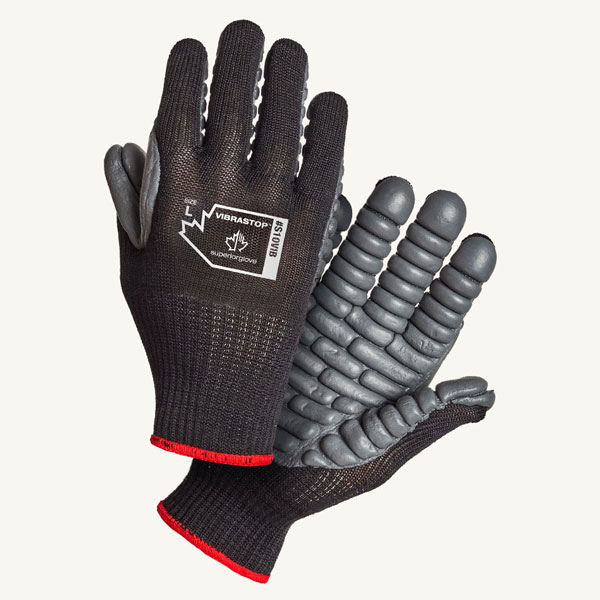
KnitActiv™ S10VIB
Vibration-dampening gloves with polymer palms for jackhammers and other low-frequency vibrations, plus synthetic back-of-hand for flexibility and comfort
Reducing Risk: More Than Just PPE
PPE plays an important role in preventive care, but it’s most effective when combined with other controls—such as administrative measures, tool maintenance, posture, and safe work practices—that also help reduce the risks associated with vibration exposure. Best practices include:
- Rotating workers between tasks to limit exposure
- Providing regular breaks to allow recovery
- Keeping tools well maintained to reduce unnecessary vibration
- Offering training on safe handling techniques and early symptom recognition
- Encouraging workers to loosen their grip where possible—the harder you squeeze, the more vibration transfers into your hands
- Supporting circulation with hand stretches or posture adjustments during breaks
Next Steps
Risks from vibration hazards may not be as obvious as cuts, puncture, or burns, but they pose a real risk with regular exposure. And while gloves can’t eliminate that risk, they can help reduce its impact when used as part of a comprehensive preventive strategy—the right PPE for the task alongside training, engineering controls, and good tool maintenance.